API 607 vs API 6FA: Fire-Safe Valve RFQ Checklist
Compare API 607 and API 6FA for a fire-safe valve RFQ. Check standard scope, tested design, certificate coverage, actuator limits and project records.
ZHONGYUE VALVE
11/15/20263 min read

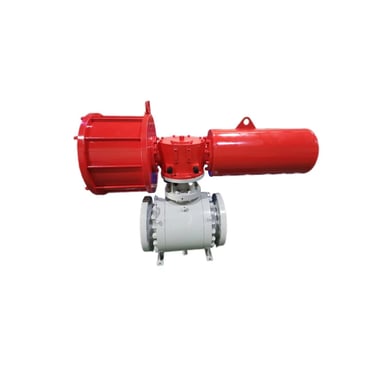
“Fire-safe valve” is often written as a short RFQ note, but a useful purchase specification must identify the required test standard, edition and evidence. API 607 and API 6FA are not interchangeable labels. They have different scopes, and a test report is relevant only when it covers the offered valve design.
This guide gives procurement teams a practical way to request and review fire-test documentation without assuming that a seat material, body material or marketing description proves qualification.
Understand the Scope Before Naming the Standard
API 607 covers fire testing of quarter-turn valves and valves equipped with nonmetallic seats. The current API catalog lists the eighth edition, published in October 2022. API 6FA is a separate API fire-test standard for valves, with its own scope and edition history.
The project specification should decide which standard applies. The RFQ should reproduce that requirement accurately rather than asking the supplier to choose after quotation. If an end user has an approved vendor list, supplementary test requirement or older project edition, include it in the inquiry.
Never change the named standard simply because another certificate is available. A deviation can be evaluated only when the offered certificate, valve design and project requirement are shown side by side.
Fire Testing Is Design Qualification, Not a Routine Production Test
A fire test exposes a representative valve to defined fire conditions and evaluates leakage and operability under the standard’s procedure. It is generally a qualification of a valve design, not a routine fire test performed on every production valve.
Production valves still require the normal material verification, dimensional inspection and pressure/seat testing specified by the purchase order. These production records do not replace a required fire-test qualification, and the fire-test certificate does not replace the production pressure-test report.
Required design or type qualification documents;
routine production inspection and testing;
project-specific witness or hold points;
optional additional tests requiring commercial and schedule review.
Verify That the Certificate Covers the Offered Configuration
Do not review only the certificate title. Request the certificate and enough underlying information to determine whether the tested design represents the offered valve.
Manufacturer and manufacturing location named in the document;
test standard and edition;
valve type and body construction;
tested size and pressure class;
body, closure, stem and seat materials;
packing, body-joint seal and gasket arrangement;
bore configuration and end connection where relevant;
operator used during testing;
report number, test date and issuing laboratory;
permitted qualification range and limitations.
API 607 generally does not treat actuators as part of its valve fire-test scope. If the project requires the complete actuated assembly to remain functional, survive a fire scenario or move to a specified safe position, state that requirement separately and define the verification method.
Avoid Common Fire-Safe Procurement Assumptions
A metal-seated valve is not automatically fire-tested. Likewise, a soft-seated valve may incorporate fire-safe design features, but the offered design still needs the required qualification evidence.
Do not accept a certificate for a different body or seat design.
Do not assume one certificate covers every size and pressure class.
Do not treat “fire-safe design” in a brochure as a test certificate.
Do not confuse external leakage limits with seat leakage requirements.
Include packing and body-joint construction in the review.
Name the required standard edition.
Check actuator coverage separately.
The supplier should identify any difference between the qualified design and the offered valve. The purchaser or appointed engineer should approve applicability before the order is released.
Fire-Safe Valve RFQ Checklist
Valve type, size, class, bore and end connection.
Design, dimensional and pressure-test standards.
Required fire-test standard and edition.
Complete material and sealing arrangement.
Manual operator or actuator details.
Required safe position and shutdown philosophy, if applicable.
Fire-test certificate and report coverage requirements.
Routine production pressure and seat tests.
Inspection and test plan with document review points.
Supplier deviation list and certificate applicability statement.
For a ball-valve inquiry, view Zhongyue Valve’s metal-seated ball valve product page and send the project datasheet through the contact page. A product page or photograph is not evidence of API 607 or API 6FA qualification; request the relevant documents for the exact offered configuration.
Zhongyue High Quality Valve Manufacturer
The products are exported to the United States, Europe, the Middle East, Southeast Asia, Russia and other countries and regions, reliable quality and reasonable price. Reliable quality and reasonable price are the basis of our continuous development.
Contact
Get in touch Please leave the questions you need to consult, later we will have a professional technical team to contact you.
Email: sales@hizhongyue.com
Tel: +86 0577-28828932
WhatsApp/WeChat: +86 15658617888
© 2026 ZHONGYUE VALVE. All rights reserved.